When packing for a camping trip in the old days, you’d load the cooler, fill it with ice, and
head out for adventure. After a hard day of recreating, you’re hungry, thirsty, and ready
to tuck into a hearty meal cooked outside. You open the cooler with all the confidence
and optimism of a little boy in a Batman t-shirt and…
Disappointment. The hot dogs are floating in gross water, the buns are soggy, and
you’re not even sure what that plastic baggie contained, but you’re sure you don’t want
to eat it. It’s okay, we’ve all been there. Those days are over.
Advantages of a portable fridge for vanlife and overlanding
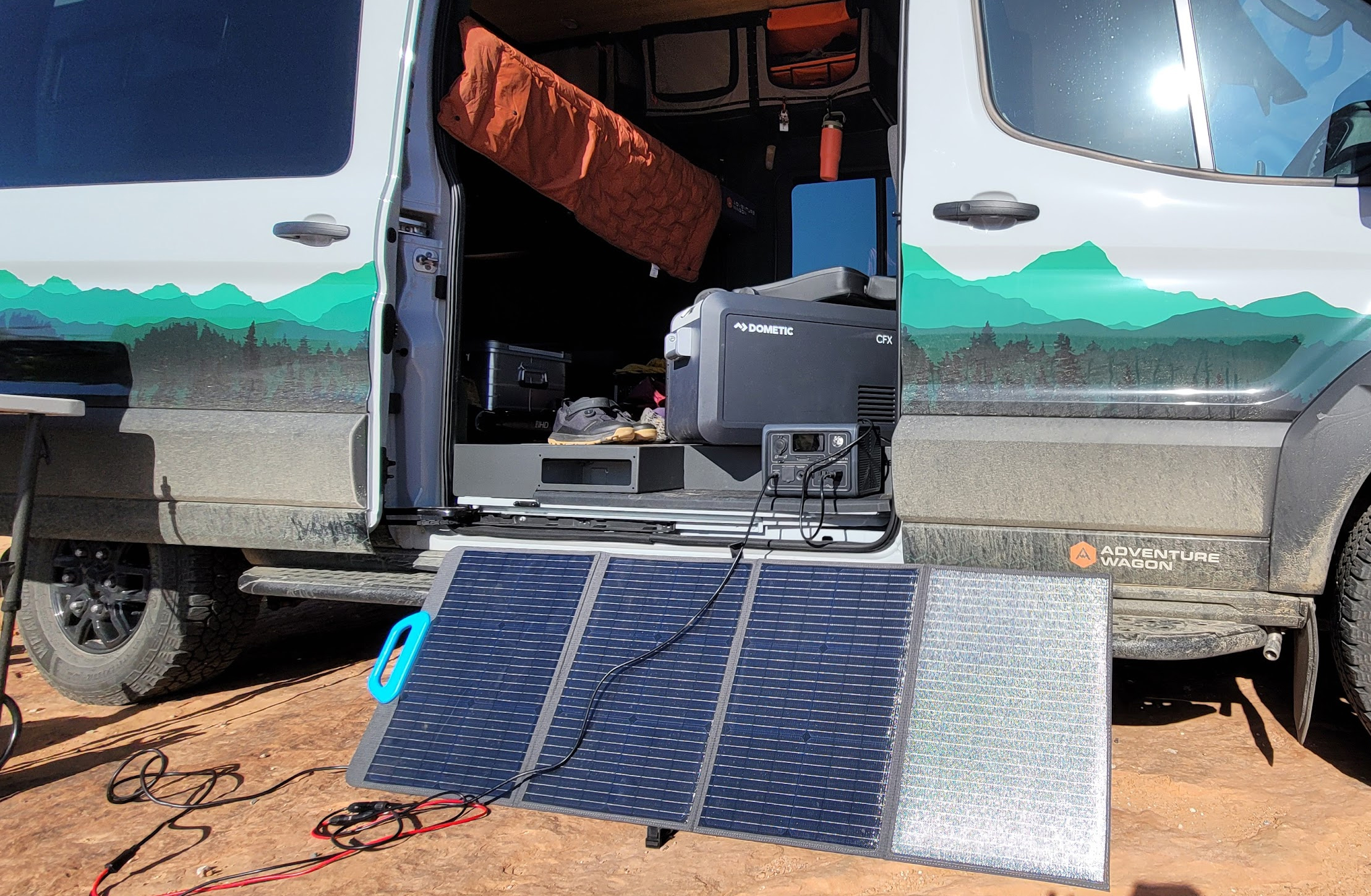
I finally broke down and bought a Dometic CFX3 35 fridge and I’ll never go back to a
cooler. My days of hunting for ice and ruined food are over. The fridge uses less energy
than a 60-watt light bulb and runs off regular AC (110-240 volts), DC (12/24 volt), and
even solar power. To complement the fridge, I bought a Bluetti EC30 battery and solar
panel.
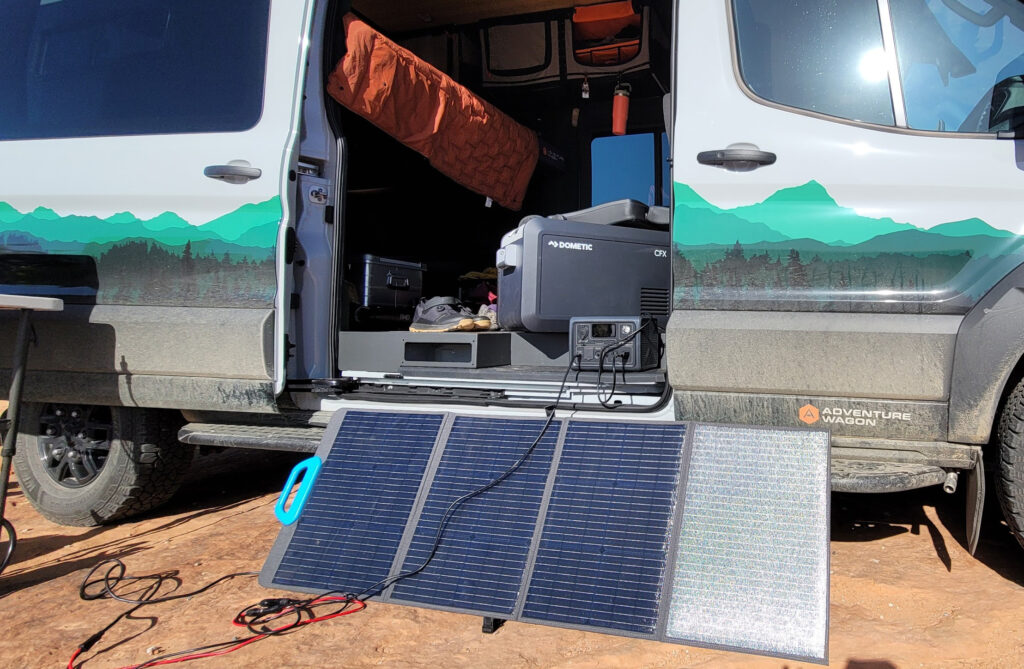
When driving, the fridge runs off your vehicle’s alternator via the 12-volt plug. When
parked for quick stops, I just leave it alone. The fridge is impressively efficient: After it
chills down to your set temp, it shuts itself off. So if stopped for under an hour or so,
there’s nothing to do. After arriving at camp, I plug the fridge into the battery, and if the
sun is still shining, I connect the solar panel to the battery as well.
Overnight, the fridge runs off the battery. I often wake up with about 50% battery left and
immediately set up the solar charger. If the truck is staying put all day — say, if I’m
exploring from camp — the solar panel charges the battery to full while also running the
fridge. If I’m driving, I’ll plug the battery into the 12-volt charger, and then the fridge to
the battery. That way, your alternator charges the battery and powers the fridge.
When parked at the trailhead, I lay the solar panel on the roof or the bed of the truck
with the cord running through the rear window to the battery. It’s so nice to return from a
hot, sweaty hike with ice-cold drinks waiting for you. The panel features a carry handle
providing the perfect place to run a locking cable through it just in case.
Disadvantages of a Fridge for Vanlife and Overlanding
Compared to a cooler, there are only a few downsides to a fridge. Refrigerators are
expensive, even more so than premium roto-molded coolers. However, the added cost
may be worth it to avoid having to find and pay for ice constantly, and for the overall
ease of use of the fridge.
Fridges are not light. My Dometic weighs 38 pounds when empty and loaded with a
week’s worth of food, it was 68 pounds. A 35-liter Yeti weighs 21.5 pounds. However,
when you consider the weight of the required ice for a cooler, things quickly balance out.
And, because you don’t need ice in a fridge, a comparably sized fridge can store more
actual food, since all the usable space is dedicated to food, not ice plus food.
Coolers are tougher. I would not take my fridge to the beach and toss it in the sand. I
also would not leave it outside to get rained on. Coolers are worry-free in that regard.
Having the fridge has certainly stepped up my outdoor food game. In the past, I would
prioritize simple meals, like pasta and oatmeal. But, having a true temperature-controlled
refrigerator puts me at ease and encourages me to bring better food.
Give one a try, and I’m sure you’ll be a convert just like me.